How Do I Get My Plumbing Ready for a Roanoke Valley Flood?
Test the sump pump, clear the discharge line, know where your main shut-offs are and keep anything valuable off the basement floor. After a flood, have gas appliances and the water heater checked before using them.
Request a plumberWhy is rain such a risk here?
Roanoke sits in a narrow valley ringed by mountains. When the remains of a hurricane stall overhead, rain drains off the slopes all at once. In 2018 the remnants of Hurricane Michael dropped more than five inches in a few hours.
What should I check before storm season?
Pour water into the sump pit and watch the pump start, empty it and stop. Make sure the discharge pipe runs well away from the foundation. Clean gutters and point downspouts away from the house.
Do I need a backup pump?
If the power goes out in a storm, the main pump stops. A battery backup pump keeps water moving for hours. See sump pumps and flood protection.
What about sewer backups?
When sewers are overloaded, water can come up through a basement floor drain. A backwater valve on the main line lets water out but not back in.
Where are my shut-offs?
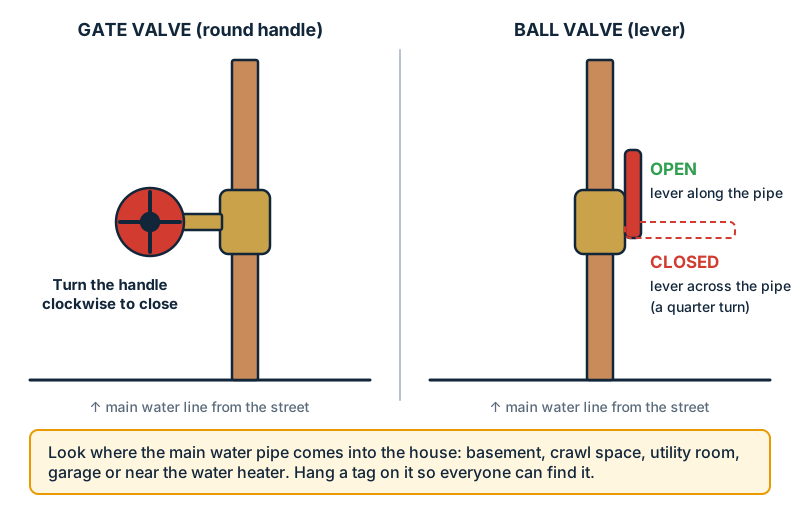
Find the main water shut-off and the gas shut-off at the meter before you need them. If water reaches outlets or the panel, don't go in.
What do I do after a flood?
Don't relight a gas water heater or furnace that sat in water; have it inspected. Pump out slowly and dry the space with fans and a dehumidifier. If drains are slow afterwards, debris may be in the line.
More plumbing guides
Need a plumber in the Roanoke Valley?
Send a request and a plumber will get in touch. Requests answered 7 days a week.
Request a plumberPrefer email? [email protected]